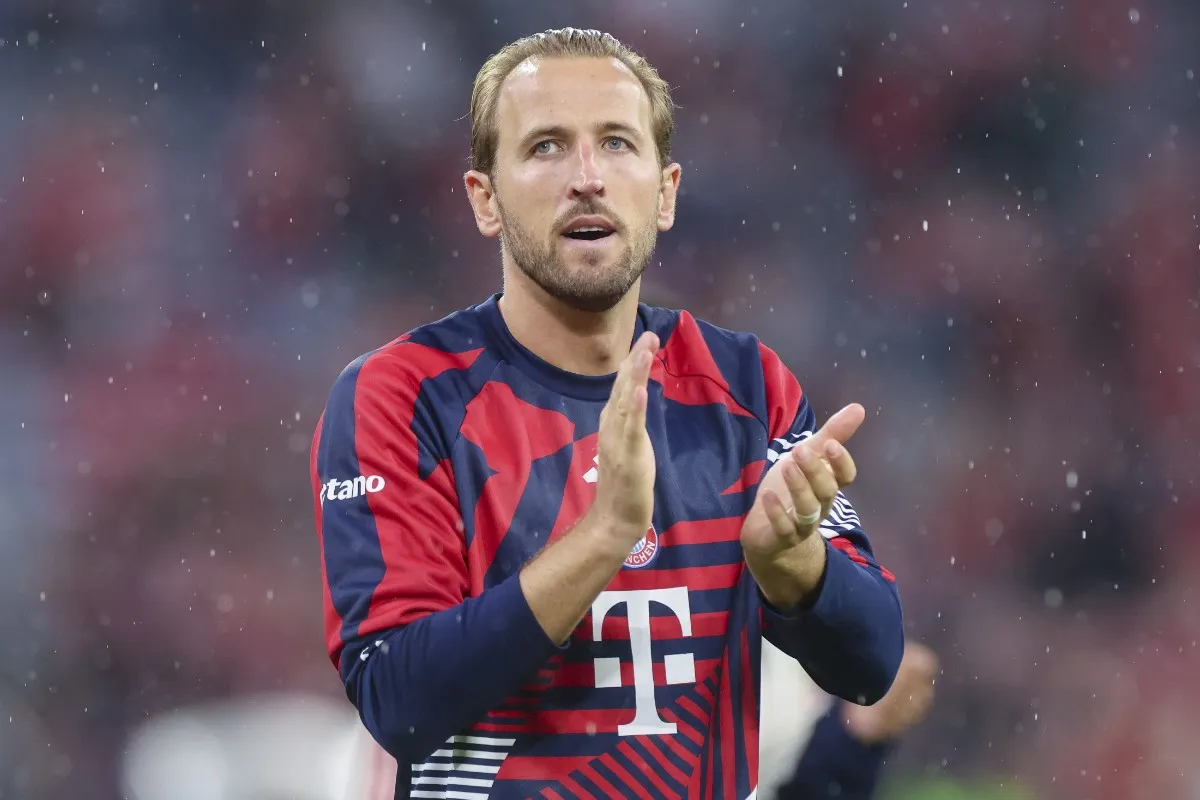
The Ballon d'Or betting favourite has won 13 of the 15 editions since 2010, giving Harry Kane an encouraging historical precedent as he prepares to enter Monday's ceremony as the market leader.
The Bayern Munich striker is priced at 1/3, implying a 75% chance of success before accounting for the bookmakers' margin. Lamine Yamal is among his closest challengers, although the Barcelona youngster is available at considerably longer odds.
History suggests that backing the shortest-priced player has generally been a profitable prediction in terms of identifying the eventual winner.
However, the record also highlights why the timing of a price check matters, with late market movements sometimes proving more informative than the odds available earlier in the campaign.
| Year | Winner | Closing favourite | Price on the day | Favourite won? |
|---|---|---|---|---|
| 2025 | Ousmane Dembélé | Dembélé | 1/6 | Yes |
| 2024 | Rodri | Vinícius Júnior | 4/9 (Rodri 4/1 to 6/1) | No |
| 2023 | Lionel Messi | Messi | 1/25 | Yes |
| 2022 | Karim Benzema | Benzema | 1/33 | Yes |
| 2021 | Lionel Messi | Messi | 1/2 (Lewandowski 5/2) | Yes |
| 2019 | Lionel Messi | Messi | 1/9 (Van Dijk had led for months) | Yes |
| 2018 | Luka Modrić | Modrić | 1/20 | Yes |
| 2017 | Cristiano Ronaldo | Ronaldo | 1/10 | Yes |
| 2016 | Cristiano Ronaldo | Ronaldo | 1/7 | Yes |
| 2015 | Lionel Messi | Messi | 1/12 or shorter | Yes |
| 2014 | Cristiano Ronaldo | Ronaldo | 1/6 | Yes |
| 2013 | Cristiano Ronaldo | Ronaldo | 4/9 (Ribéry favourite until about November) | Yes |
| 2012 | Lionel Messi | Messi | Odds-on, price not found | Yes |
| 2011 | Lionel Messi | Messi | Favourite, price not found | Yes |
| 2010 | Lionel Messi | Wesley Sneijder (pre-season); Iniesta and Xavi (final three) | Sneijder 3/2 in pre-season; Messi 7/1 | No |
Ballon d'Or betting favourites: What does the historical record show?
Since 2010, the closing favourite has won 13 of the 15 Ballon d'Or editions, according to the available historical odds record. Of the 12 editions for which a closing price could be verified, 11 favourites went on to collect the award.
The distinction matters because the historical sample is incomplete. The overall 13-from-15 figure includes editions for which the favourite was identifiable but a reliable closing price was unavailable.
The more tightly documented 11-from-12 record offers a clearer indication of how the market has performed where odds can be established.
The strongest favourites have been particularly reliable. Every player priced at 1/6 or shorter in the documented sample won the award, covering nine editions between 2014 and 2019, 2022, 2023 and 2025.
The record becomes less convincing when the favourite is available at longer odds. Cristiano Ronaldo won in 2013 at 4/9, while Lionel Messi prevailed in 2021 at 1/2. Vinicius Junior, however, was beaten in 2024 despite being priced at 4/9 shortly before the ceremony.
These examples suggest that the market's confidence in a contender is an important consideration, although the limited number of cases means the figures should not be treated as a guarantee of future results.
Lionel Messi and Cristiano Ronaldo dominated the betting market
Much of the historical success of Ballon d'Or favourites can be attributed to Messi and Ronaldo, who were the market leaders in 10 of the 15 editions between 2010 and 2025 and won all 10.
The other five editions produced three victories for the favourite, with Luka Modric winning in 2018, Karim Benzema in 2022 and Ousmane Dembele in 2025. Messi and Ronaldo's dominance therefore accounts for a substantial proportion of the market's impressive overall record.
That does not necessarily mean the betting favourite is less reliable when neither player is involved. The sample is too small to establish that conclusively, and the award's voting format, the strength of the candidates and the timing of the odds all influence the outcome.
Nevertheless, the historical record provides a useful reminder that the market can be heavily influenced by established superstars, particularly when their individual performances and team achievements align.
When the Ballon d'Or betting favourite gets it wrong
The 2010 award illustrates the difficulty of comparing historical markets across different voting systems. Messi won ahead of fellow Barcelona players Andres Iniesta and Xavi, despite both having played key roles in Spain's World Cup triumph. Wesley Sneijder, who won the treble with Inter Milan, was another prominent contender.
Sneijder had been a major name in the market earlier in the campaign, but the eventual result demonstrated that early-season expectations do not necessarily reflect the market immediately before the ceremony. The 2010 edition was also the first under the merged FIFA Ballon d'Or format, which incorporated votes from national-team coaches and captains alongside journalists.
The most relevant recent upset came in 2024. Vinicius Junior was the clear betting favourite after helping Real Madrid win the Champions League, but Manchester City midfielder Rodri collected the award. Rodri had also won the Premier League and played a prominent role in Spain's European Championship triumph.
The result showed that team success across several major competitions can complicate the market's assessment of an individual award. It also demonstrated that even a heavily backed candidate can lose when voters favour a rival's overall achievements.
Other races underline the importance of monitoring the market close to the ceremony. Virgil van Dijk was a leading contender for much of 2019 before Messi moved ahead, while the 2021 market shifted between Robert Lewandowski and Messi as reports about the likely result circulated.
The lesson is that September prices and early-season predictions should not automatically be treated as representative of the final market.
Where does Harry Kane's 2026 price sit?
Kane's reported odds of 1/3 place him among the strongest favourites in the available sample, although his price falls between the two groups that provide the clearest historical comparisons.
Every documented favourite priced at 1/6 or shorter won, while the known losing favourite was Vinicius at 4/9. Kane's price is shorter than Vinicius's but longer than the prices associated with the nine successful favourites in the shortest-odds group.
At 1/3, a successful £1 bet would return approximately £1.33, including the original stake, for a profit of 33p. The corresponding implied probability is 75%, meaning the market price leaves a theoretical 25% chance of defeat before the bookmaker's margin is considered.
Kane's individual record and team achievements provide the sporting context for his position in the market.
However, the award is determined by voting rather than goals alone, and previous finishes outside the top 10 mean that he does not have the established Ballon d'Or record enjoyed by Messi and Ronaldo.
Even if the historical trend favours backing the shortest-priced contender, the value of a bet depends on whether the probability of winning is greater than the probability implied by the available odds.
Verdict: Should you back the Ballon d'Or favourite?
The historical record favours the market leader, with 13 winners from 15 editions since 2010 according to the broader dataset and 11 victories from 12 editions with verifiable closing odds.
However, the figures are based on a limited sample, and the incomplete archive prevents a definitive assessment of every ceremony. The success of Messi and Ronaldo also accounts for a substantial share of the record.
Kane's 1/3 price makes him a strong favourite, but the 2024 result demonstrates that even a contender with compelling credentials can lose.
The most useful lesson from the historical data is to assess the closing market rather than relying on prices from earlier in the season, while remembering that a likely winner is not automatically a value bet.
Methodology
The favourite is defined as the shortest-priced player in the outright market on the day of the ceremony or during the final days before it. Where substantial late movements occurred, the closest available price to the ceremony was used.
The research covers 2010 onwards because a reliable archive of closing odds could not be established for 2000-2009. Closing prices were also unavailable for every edition between 2010 and 2025, so the broader 13-from-15 record and the documented 11-from-12 record are presented separately.
The figures combine prices reported by different bookmakers and odds aggregators. Implied probabilities are calculated from the quoted fractional odds and have not been adjusted for bookmaker margins. Changes to the award's voting arrangements and eligibility period also mean that results across different eras are not perfectly comparable.